Videos
The Credit Union Difference
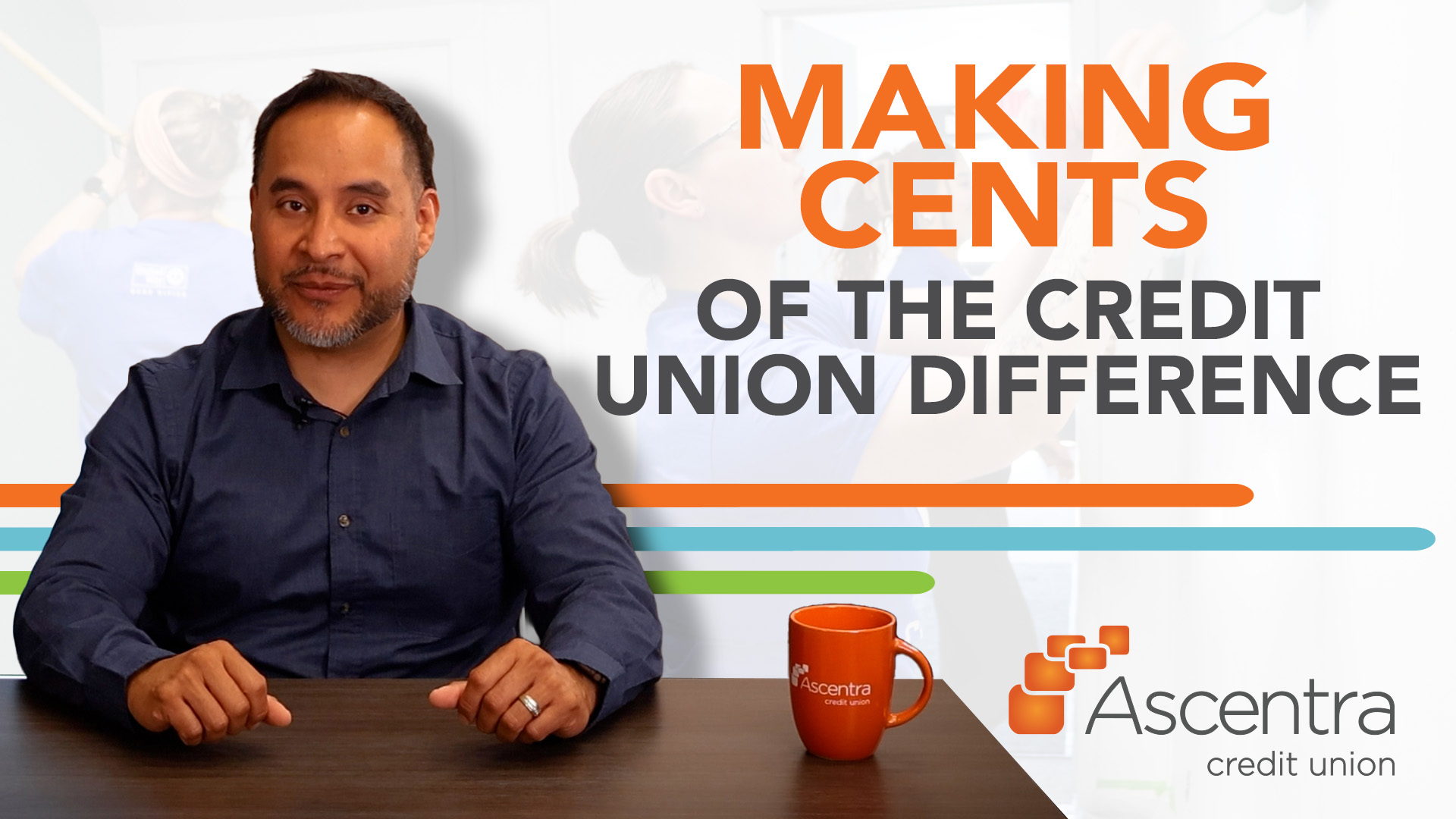
Hello everyone, I’m Alvaro and I’m going to help you understand what sets credit unions apart from banks.
While banks and credit unions offer a lot of the same products and services like savings and checking accounts, credit cards, and loans… that is about all they have in common.
The differences between banks and credit unions are their:
- Business structures
- Ownership
- And last, but not least, the mission.
In this video, I’ll dive a little deeper into these three areas to help make sense of the credit union difference.
The biggest contrast between credit unions and banks is in the not-for-profit structure of credit unions.
Most businesses generate revenue for their owners, investors, or shareholders.
The more money a business makes, the better it is for the people at the top… but that usually comes at the expense of their customers.
Banks are no different.
Profits from the loans and services they provide go to their owners or shareholders.
Churning out dividends on a regular basis is top priority.
That may be great for the investors … but not necessarily the best thing for consumers.
“If customer service takes a hit … or fees and costs go up for customers … so be it! All in the name of profits!”
Now don’t get me wrong … I believe banks have a place.
However, they also actively lobby to get rid of credit unions to not only eliminate “competitors” … but eliminate a mission-driven industry that, quite frankly, keeps them fair.
We have seen headlines time and time again, where some banks resort to questionable and downright illegal practices in their quest for bigger profits.
Now if you wondered why I did “air quotes” when I said “competitors” … it’s because in the United States, banks own an astonishing 91-percent of deposits compared to a mere eight-percent for credit unions.
Credit unions are really not competitors and banks are currently enjoying record profits … so what would compel them to target credit unions?
One word: greed.
The for-profit banking model also affects whether they open branches in certain areas … or even keep open branches located in areas they consider no longer performing to their standards.
In fact, according to the FDIC … NCUA … and America’s Credit Unions … since 2012 banks have closed more than 20,222 branches, while credit unions have opened 562 branches.
This has a devastating effect on the people who lose those jobs … and on the communities that become financial deserts.
In contrast, the credit union model does not put profits over service.
Credit unions don’t squeeze profits out of the organization to pay investors.
The profits are pumped right back into the organization for the benefit of the members.
Credit union members get less fees and lower interest rates on loans … and higher returns on their savings products.
Credit unions also regularly rank higher in overall satisfaction on average compared to banks.
Two recent J.D. Power studies showed that credit unions scored 74-points higher than the average bank in satisfaction scores.
Credit unions are popular with the average American who needs basic financial products… and even those seeking wealth building services.
That is why 142-million American consumers are credit union members.
Credit unions are governed by a board of directors who are all members of the credit union … most of them are volunteers.
Board members are democratically elected by the membership to provide oversight and guidance on the general direction of the credit union.
Any member can run for a board seat … regardless of how much money they have in their accounts.
So, if you’re not happy with the direction of your credit union, you can run to join the board or at the very least, vote for those who are keeping the organization accountable.
This helps credit unions stay responsive to their communities and their members.
Credit unions are also limited to serving members who have a common bond.
A credit union’s “field of membership” determines who is eligible to become a member.
The restriction usually applies to people who:
- Live in a certain region…
- Work for a certain employer or industry sector…
- Or even if they are part of the military.
For example, there are federal credit unions that provide membership for federal workers and their families … while smaller credit unions might just service a specific region or town.
You can think of them as “exclusive” … but just about every American can join a credit union.
At Ascentra, our field of membership is open to people who live or work within 21 counties in Eastern Iowa and Western Illinois.
While some may see this as a limiting factor, credit unions consistently punch above weight when competing with large national banks by working together to help provide service to all their members in very unique ways.
Cooperation among cooperatives – this is actually one of the principles of cooperatives – which is exactly what credit unions are.
Cooperatives are organizations that are owned and ran by their members to meet the common needs of the membership.
Many credit unions partner with each other to allow their members to mutually benefit.
One example of that cooperative spirit is the shared branch network … a service that lets you have a membership at a credit union in Bettendorf, Iowa … but go to college on the other side of the country without worrying about having access to your accounts.
Shared branching allows members to walk into any one of over 56-hundred credit unions across the country to make withdrawals, transfers, or loan and mortgages payments.
If you’re a snowbird or maybe on spring break in Florida … Orlando credit union can do business for Ascentra members … and we can do the same for their members at our shared branches.
Credit unions also give back to their local communities.
As not-for-profits, credit unions have a tax-preferred status … which means we pay all taxes except for federal corporate income tax.
The tax savings and credit union profits are used to offer better rates and services to our members… and reinvest in the community by:
- Funding local programs
- Teaching financial wellness
- Partnering with charitable organizations
- Helping members going through hardships
- Volunteering… and more.
This has proven to be a great investment for taxpayers.
Many studies show high returns for millions of credit union members and the overall economy.
For years… bank lobbyists have been trying to have credit unions’ tax status taken away … but that would not only affect credit unions … but the people we serve.
It would cost our members more money … and hurt our ability to make a community impact … which is deeply engrained in why credit unions exist in the first place.
Our guiding philosophy is “people helping people.”
This has been the mission since day one!
Credit unions were born because people of modest means were turned away by banks … and being preyed upon by loan sharks.
They came together to lend each other money … to help each other grow and be successful.
They created cooperatives … the early credit unions.
Those issues are still happening today.
Many banks don’t offer small consumer loans or help people with lower credit scores … leaving them to turn to payday lenders or pawn shops. Credit unions step in to fill that gap.
Plenty of credit unions have a similar story.
A group of people who had an employer, church, or organization in common and were fed up with unresponsive banks and took control of their finances.
For Ascentra Credit Union, it began in 1950 with a group of union employees working at the Alcoa Davenport works plant.
They organized and created Alcoa employees credit union … with some of the earliest loans being used to help buy coal to heat their homes … or help put a down payment on a house.
Today, the credit union serves more than 40,000 members and manages more than 556-million dollars in assets.
It’s also grown to nine branches located in Bettendorf, Clinton, Davenport, and Muscatine, Iowa, and Moline, Illinois.
The efforts to help people going through hard financial times has also multiplied.
At Ascentra, we partner with organizations to provide financial wellness for people of all walks of life.
We’ve even created a foundation to ensure that even in tough economic times, we are still able to give back.
We don’t just write a donation check.
We foster relationships with area changemakers and organizations who align with our mission … those who amplify our beliefs of listening, caring and doing what’s right.
That goes beyond just helping people get a loan.
It’s the way we carry ourselves and how we help others in our community.
So, what’s the credit union difference?
It’s simple … credit unions work to improve our communities because we work for and are owned by the people in our communities.
We will continue to grow and evolve to meet the needs of our members … because the credit union difference is the core of everything that we do
- Mc-Feature-cud
- Making Cents
-

Fixed Rate Mortgage
10 & Done (10 Year Fixed)6View Mortgage Loans% -
Vehicle Loans
New & Used Auto as Low as4.74View Vehicle Loans% APR -
Savings
Membership Share Savings Starting at0.05View Savings Accounts% APY -
Credit Cards
No Balance Transfer Fee. 6-Mo. Intro Balance Transfer2.99View Credit Cards% APR




-
-
-
-
-
-
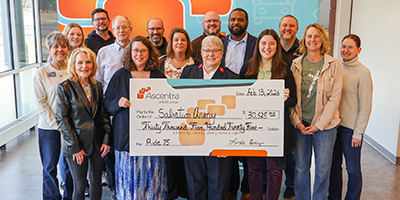
Ascentra Cares Feb 18, 2026
Ascentra's Holiday Auto Loan Promotion Raises $30,525 for Salvation Army
-
-
-
-
-
-
-
-
-
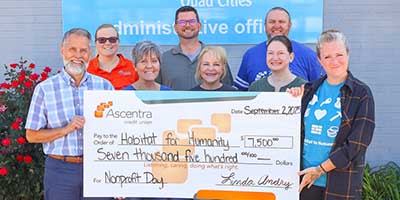
Ascentra Cares Sep 10, 2025
Ascentra Credit Union Celebrates 75 Years with “10 Days of Giving” Honoring National Nonprofit Day