

Your Credit Score

Making Cents of Your Credit Score

Did you know that your credit score could be quietly draining your wallet without you even realizing it?

Whether you’re applying for a loan, renting an apartment, or shopping for car insurance, your credit score plays a significant role in your financial future. Understanding how it works can empower you to take control and save a substantial amount of money.

In this article, we will break down what your credit score consists of, what factors can negatively impact it, how to improve it, and why it matters more than you might think.

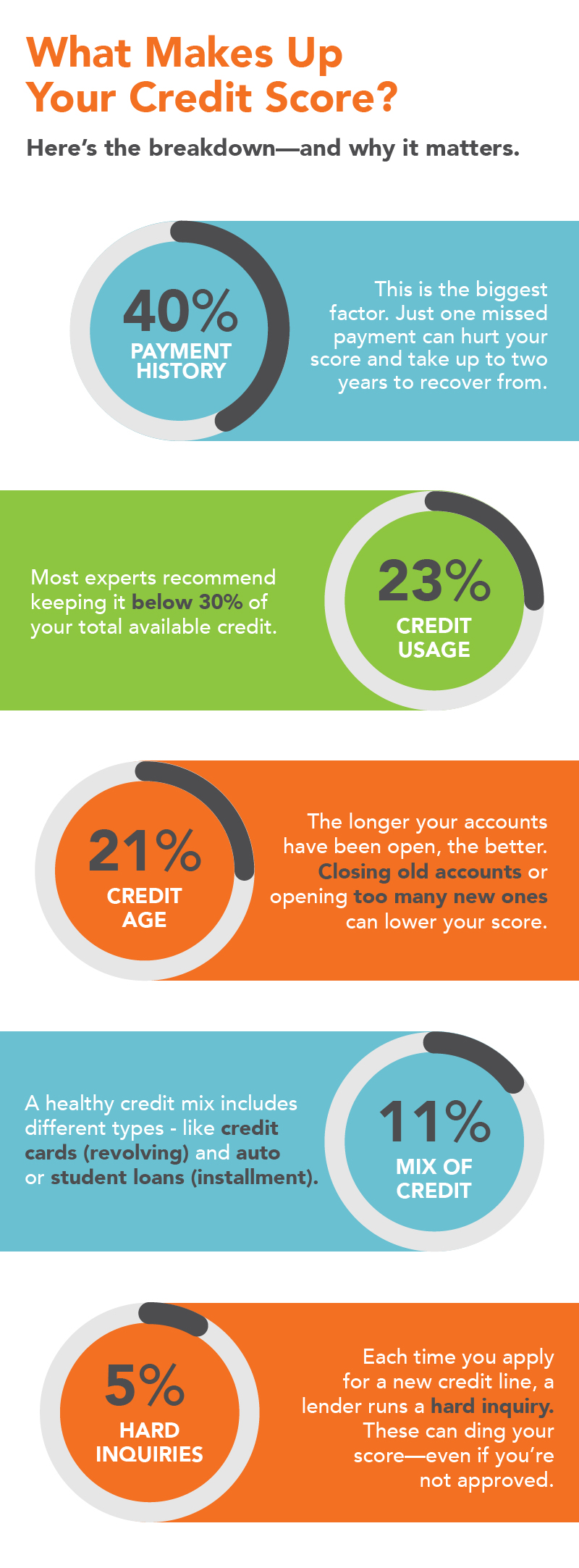
Your credit score is calculated based on five main factors:

  • Payment History (40%) - This is the most important factor, tracking whether you pay your bills on time. Just one missed payment can take up to two years to recover from. Even after paying off a debt, it may remain on your report for 7–10 years.


  • Credit Usage (23%) - Also known as credit utilization, this measures how much of your available credit you're using. Experts recommend keeping your utilization under 30%.


  • Credit Age (21%) - This refers to the average age of your open accounts. Closing long-standing credit lines or opening too many new accounts can reduce this average and negatively affect your score.


  • Mix of Credit (11%) - Lenders prefer to see a variety of credit types, including installment loans (like mortgages or car loans) and revolving credit (like credit cards). A healthy mix can boost your score.


  • Hard Inquiries (5%) - Each time you apply for credit (credit cards, loans, etc.), a hard inquiry is made, which can negatively impact your score, even if you’re not approved. Soft inquiries, like those made by landlords or employers, do not affect your score.

When you understand what makes up your credit score, you can start building or repairing your credit. 

If you’re just starting, consider applying for a low-interest credit card from Ascentra Credit Union. Use it for small purchases and pay it off each month to establish consistent, positive history  and avoid interest charges.

Free financial coaching is available to help you through the process. At Ascentra Credit Union, we offer coaching services at eight branch locations, including Spanish-speaking support. Our coaches review your credit with a soft inquiry, ensuring it doesn’t affect your score, and create a personalized action plan to assist you with budgeting, debt reduction, and long-term planning.

Online services like SavvyMoney, available through Ascentra’s Digital Banking, let you view your credit report and receive tips on how to improve it. Avoid apps that sell your data; stick to trusted sources like AnnualCreditReport.com, where you can obtain a free report from TransUnion, Equifax, and Experian once a year.

You may also want to consider a consolidation loan that combines multiple debts into one lower-interest payment, which can help with your payment history, credit usage and credit mix. Just be careful not to use the paid-off credit lines and don’t close them, as doing so could hurt your score.

Taking these steps is a fantastic start to building or repairing your credit. You may begin to see positive changes on your credit report within a month.

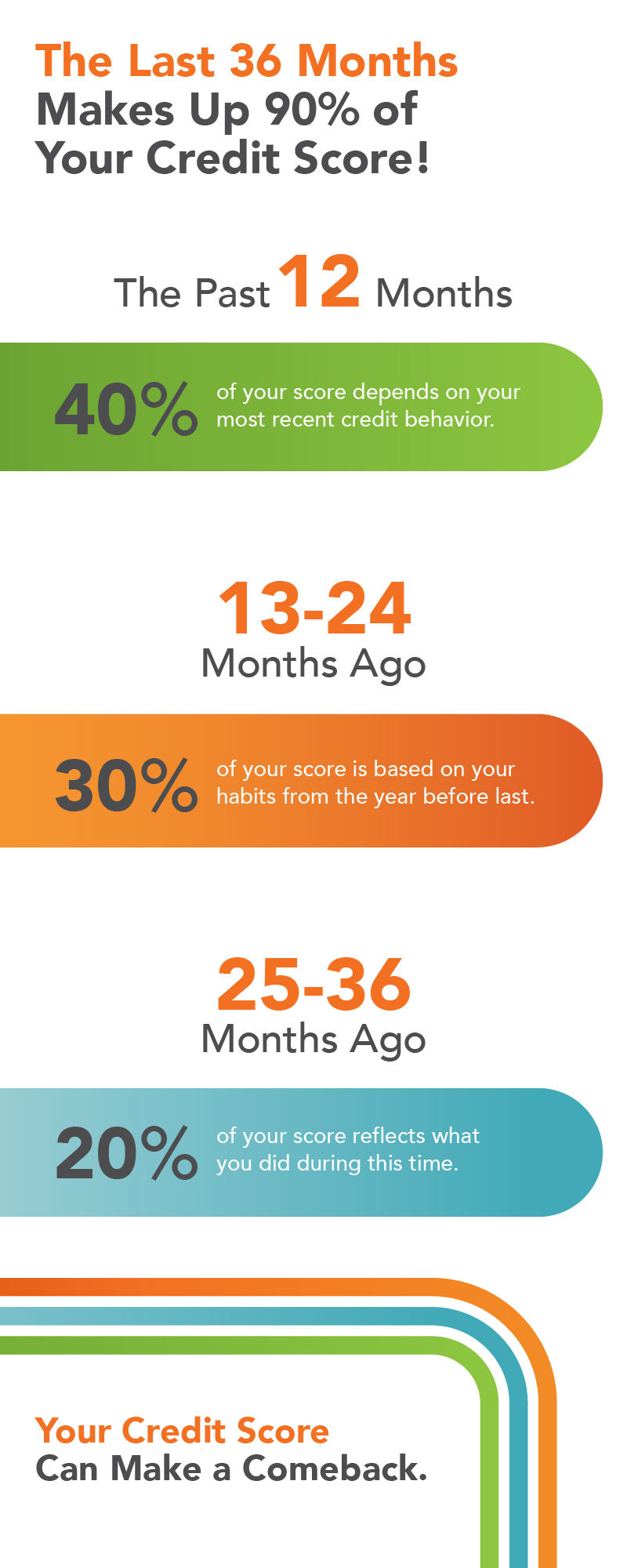
Most of your credit score (90%) is based on activity from the past three years:


  • 40% from the last 12 months
  • 30% from the previous 13–24 months
  • 20% from the previous 25–36 months

So, although there is no instant fix, progress is certainly achievable with time and effort.


Your credit score doesn’t just determine whether you get approved for a loan; it also impacts how much you’ll pay. 


  • A higher credit score could save you tens of thousands of dollars on a mortgage.
  • Lower scores can double your car insurance premiums.
  • Employers sometimes run soft credit checks during hiring, and poor credit might limit job offers.

CreditScore-Callout-1200x1200-2

However, keep in mind that your income, rent payments or how long you’ve been employed do not affect your credit score. While they may influence loan decisions, they are not factored into the score itself!


Improving your credit score isn’t about achieving perfection but about making consistent progress.

You can do this by focusing on your payment history, credit usage, credit age, mix of credit, and hard inquiries. If you’re unsure where to start, ask for help! Ascentra Credit Union is here to support you with coaching, tools, and guidance tailored to your specific goals.

Your credit journey is just that, a journey.
Take the first step today and keep moving forward.

Related Articles

See All Articles

How Does Gas Price Impact Your Summer Vacation

  • Jun 30, 2026

Make Summer Travel More Affordable

June marks the start of summer vacation season, but this year’s travel planning is happening in a vastly different economic environment. With inflation still pressuring household budgets and gas prices climbing across much of the U.S., many families are taking a closer look at what a trip will really cost before they pack the car. The good news? A few smart choices before you leave, and along the way, can help keep more money in your pocket.

Get the Most from Every Fill-Up

 Rising gas prices are one of the most noticeable ways the economy affects daily life. As summer demand increases, even routine road trips can feel more expensive before they begin. Federal tracking showed the U.S. average at about $4.50 per gallon in the latest update, while AAA’s daily average recently moved above that level. That means efficiency matters more than ever. Start with the basics: check your tire pressure before you hit the road, remove heavy items you don’t need, and avoid rapid acceleration and hard braking. Maintaining a steady speed and using cruise control when conditions allow can help improve fuel economy over long drives.

Also consider timing and routing. Planning your fill-up stops before you leave can reduce last-minute, high-priced purchases near tourist areas. Gas price comparison apps such as GasBuddy or Mudflap can help you find lower-priced stations nearby and along your route.

 Understand the “Hidden” Costs of Fuel

When fuel costs rise, they don’t just affect your drive, they can influence prices throughout the travel experience. Higher energy costs often ripple into airfare, lodging, food, and entertainment, which is one reason many consumers are feeling stretched in today’s economy. Recent inflation data showed overall prices rising 3.8 percent year over year, with energy going up sharply and gasoline going up even more. A simple strategy is to prioritize what matters most: set a daily spending target for fun extras, look for bundled attraction passes, and consider free or low-cost local options such as parks, festivals and community events to balance bigger-ticket activities.

How Ascentra Can Help

If you’d like added flexibility for summer plans, Ascentra Credit Union offers options that may help you manage cash flow. A personal loan can be a way to cover planned expenses, like a family trip, with predictable payments. Prefer to plan ahead? A club savings account can help you set aside money throughout the year for seasonal spending. And if an unexpected expense hits at the wrong time, Skip-A-Payment may allow eligible members to defer a loan payment (processing fees and restrictions apply).

Bottom Line

Every trip has its own challenges, but a little planning can go a long way. Map your route and fill-up locations, use available tools to compare prices, and practice fuel-smart driving habits. Whether you’re traveling far, staying close, or enjoying a staycation, Ascentra is here to help you make summer more affordable, and more enjoyable.



Ascentra Great Rates

View All Rates


What's New at Ascentra

See All Articles