Workplace Benefits
Understanding Workplace Benefits: Retirement, Health Insurance, and More
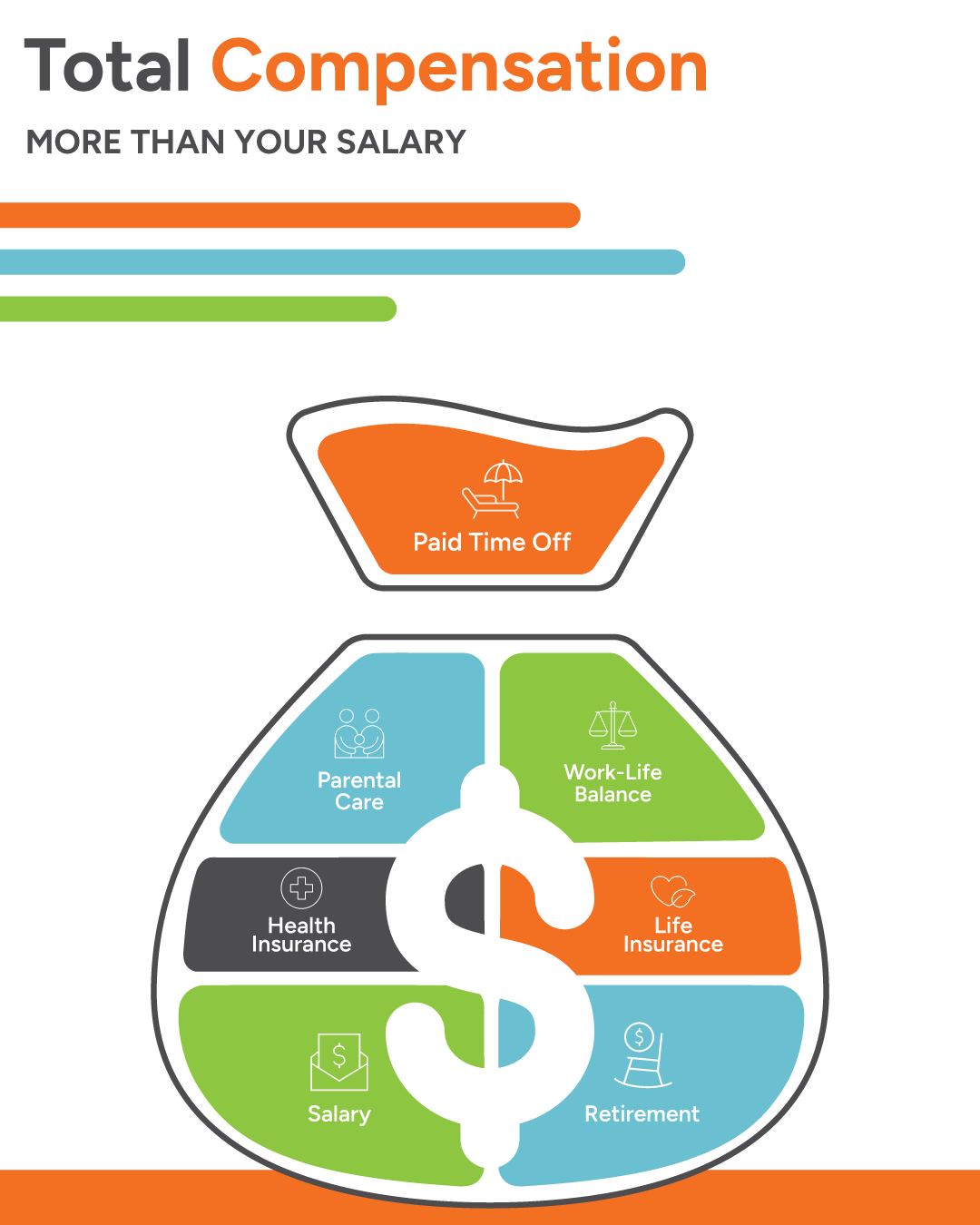
When evaluating a job offer, it's easy to focus on the salary. But your paycheck is only one piece of your total compensation package.
Workplace benefits can add significant value to your financial future and day-to-day life. Retirement plans, healthcare coverage, paid time off, and other benefits can help you save money, protect your income and provide peace of mind when life throws you a curveball.
Understanding these benefits can help you make informed decisions about your career, your finances and your future.
Retirement Benefits
Retirement may seem far away, but workplace retirement benefits can have a major impact on your long-term financial success.
Understanding 401(k) Plans
A 401(k) is one of the most common retirement benefits offered by employers. It allows you to invest money directly from your paycheck into a retirement account.
These funds are typically invested in a mix of stocks, bonds, mutual funds, and other investment options designed to help your savings grow over time.
Because contributions are deducted automatically from your paycheck, a 401(k) can make saving for retirement easier and more consistent.
Understanding Vesting
Before counting employer contributions as yours, be sure to understand your company's vesting schedule.
A vesting schedule determines when employer contributions become fully yours. If you leave the company before you're fully vested, you may lose some or all of the employer-funded portion of your account.
The Value of Employer Matching
Many employers offer a 401(k) match, meaning they contribute additional money to your retirement account based on what you contribute.
For example, an employer may match 50% or 100% of your contributions up to a certain percentage of your salary.
Employer matching is often considered one of the most valuable workplace benefits because it can significantly increase your retirement savings over time.
The Power of Compounding
One of the greatest advantages of saving early is compound growth.
Compounding occurs when your investment earnings generate earnings of their own. Over time, this creates a snowball effect that can dramatically increase your retirement savings.
The earlier you start contributing, the more time your money has to grow.
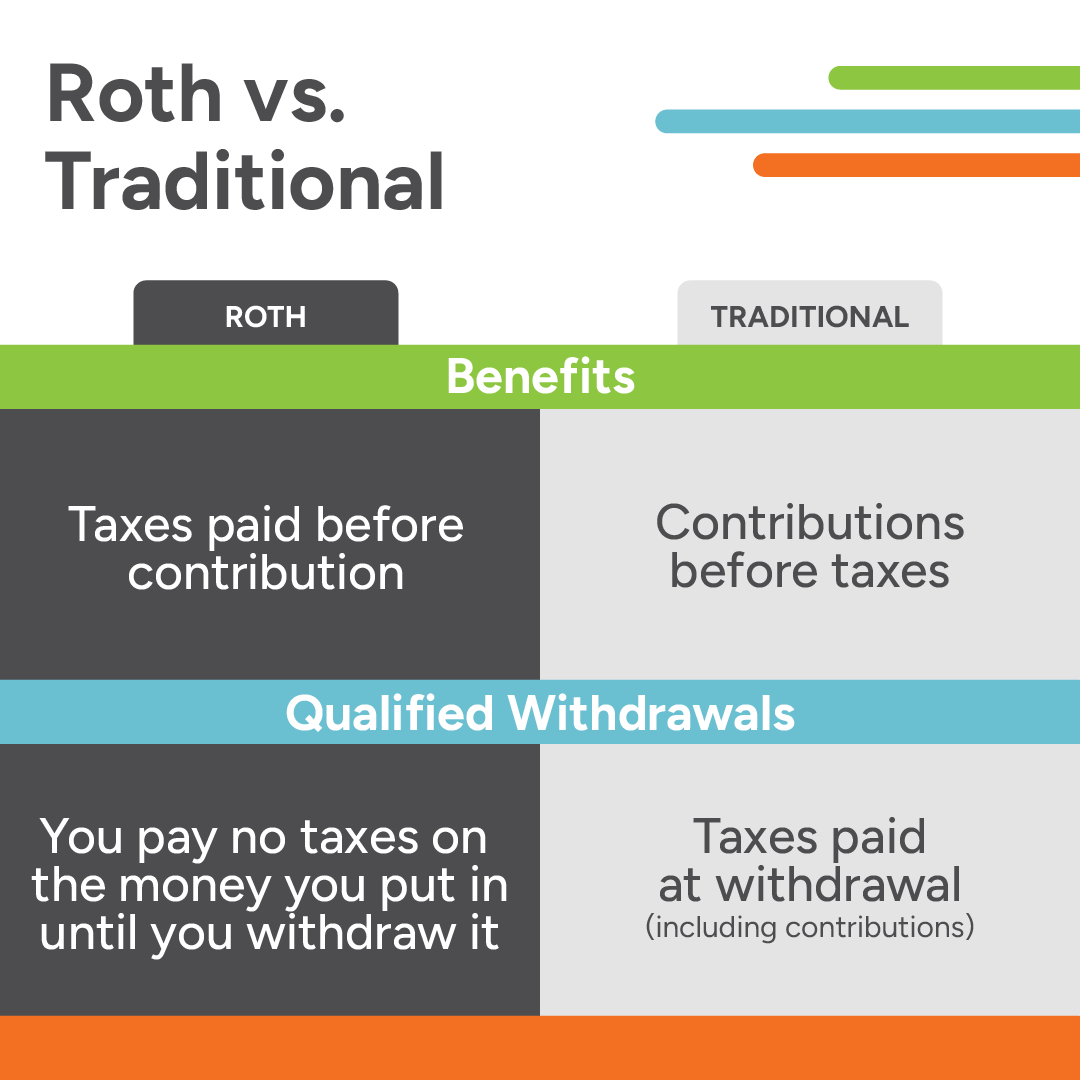
Roth vs. Traditional 401(k)
Many employers offer both Traditional and Roth 401(k) options.
Traditional 401(k):
- Contributions are made before taxes
- May reduce your taxable income today
- Withdrawals in retirement are generally taxed
Roth 401(k):
- Contributions are made after taxes
- No immediate tax deduction
- Qualified withdrawals in retirement are generally tax-free
Early Withdrawals and Rollovers
Because 401(k) plans are designed for retirement, withdrawing money before age 59½ may result in taxes and penalties.
If you change jobs, you can often transfer your retirement savings through a rollover into another employer-sponsored plan or an Individual Retirement Account (IRA) without triggering penalties.
Understanding these benefits can help you maximize every dollar you're saving for the future.
Healthcare Benefits
Healthcare benefits can be one of the most valuable parts of a compensation package, but they can also be one of the most confusing.
Learning a few key terms can make comparing plans much easier.
Key Insurance Terms
- Premium
The amount you pay to maintain your insurance coverage, typically through payroll deductions. - Copay
A fixed amount you pay for certain services such as doctor visits, prescriptions, or urgent care appointments. - Deductible
The amount you pay out of pocket before your insurance begins sharing a larger portion of costs. - Coinsurance
The percentage of healthcare costs you share with your insurance company after meeting your deductible. - Out-of-Pocket Maximum
The most you'll pay for covered, in-network healthcare services during a plan year. Once you reach this limit, your insurance generally pays 100% of covered costs for the remainder of the year.
Looking Beyond Monthly Premiums
The lowest monthly premium isn't always the least expensive option.
A lower-premium plan may come with higher deductibles, coinsurance requirements, or out-of-pocket maximums. When comparing plans, consider both the monthly cost and what you might pay if you need significant medical care.
Common Health Plan Types
- Health Maintenance Organization (HMO)
HMOs often offer lower premiums and deductibles but generally require you to use in-network providers and obtain referrals for specialists.
- Preferred Provider Organization (PPO)
PPO plans typically provide more flexibility by allowing access to a broader network of providers and specialists without referrals, though premiums are often higher.
- High-Deductible Health Plan (HDHP)
HDHPs generally feature lower monthly premiums but higher deductibles and out-of-pocket costs. They may be a good fit for healthy individuals who don't expect frequent medical expenses.
Health Savings Accounts and Flexible Spending Accounts
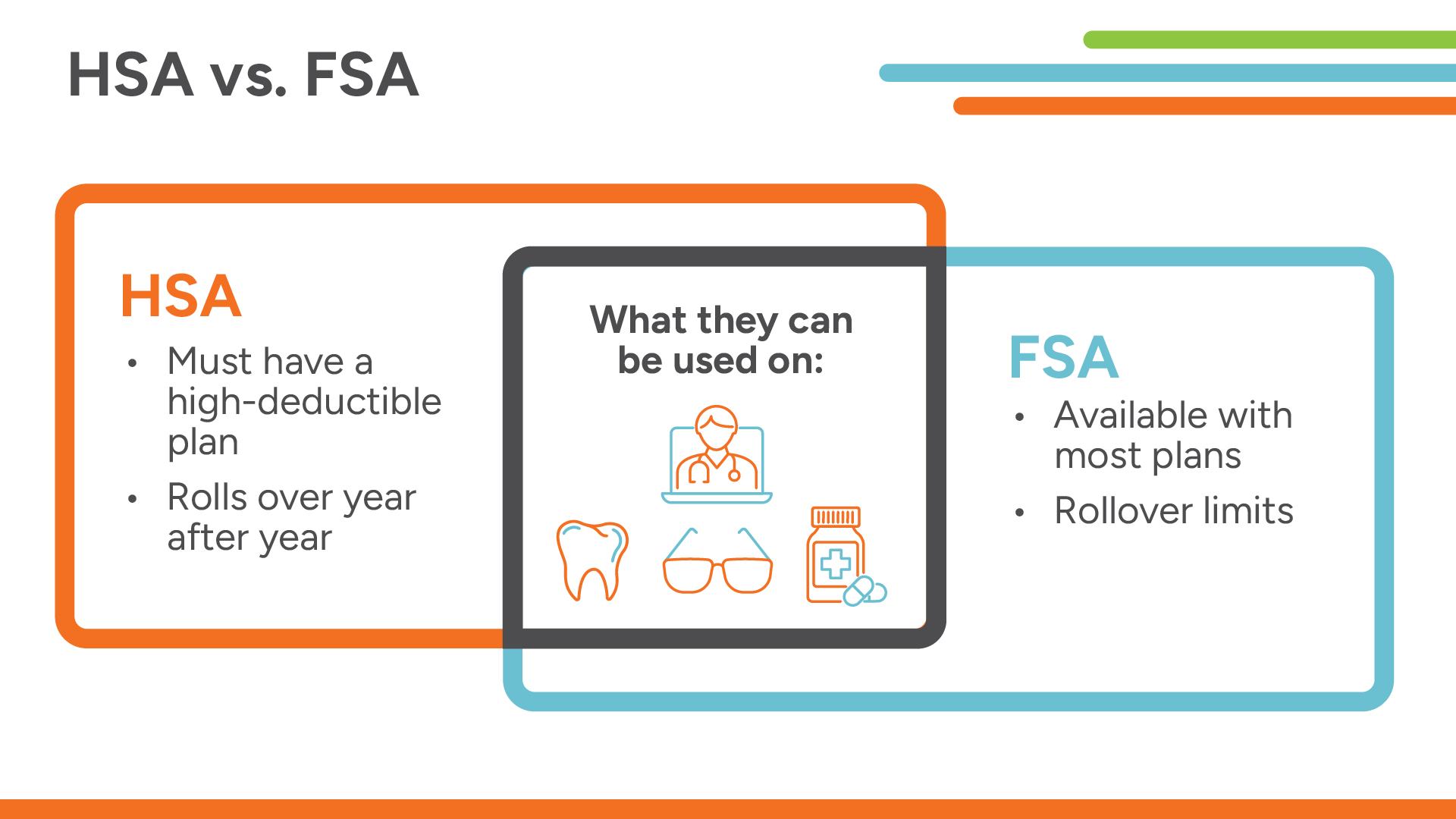
Health Savings Accounts (HSAs)
If you're enrolled in a qualified High-Deductible Health Plan, you may be eligible for a Health Savings Account (HSA).
HSAs offer several advantages:
- Contributions are made pre-tax
- Earnings grow tax-free
- Qualified medical withdrawals are tax-free
- Unused funds roll over year after year
For many people, HSAs can be a powerful tool for managing healthcare costs while building long-term savings.
Flexible Spending Accounts (FSAs)
FSAs also allow you to use pre-tax dollars for eligible healthcare expenses.
Unlike HSAs, however, FSAs typically have rollover limitations. Depending on your employer's plan, unused funds may be forfeited at the end of the plan year.
When choosing between available options, it's important to understand how each account works and which best fits your needs.
Dental and Vision Coverage
Many employers also offer dental and vision insurance. These benefits can help reduce routine healthcare expenses for individuals and families.
Dental plans commonly help cover:
- Preventive exams
- Cleanings
- X-rays
- Basic restorative care
Vision plans may help cover:
- Eye exams
- Prescription glasses
- Contact lenses
Income and Family Protection Benefits
Some of the most important workplace benefits are often overlooked because they're only needed during unexpected life events.
Disability Insurance
Disability insurance helps replace a portion of your income if an illness or injury prevents you from working.
Coverage may be offered as:
- Short-term disability
- Long-term disability
For many families, this protection can be just as important as health insurance.
Life Insurance
Life insurance provides financial protection for your loved ones if something happens to you.
Many employers offer a basic life insurance policy at little or no cost to employees, with options to purchase additional coverage.
For some individuals, employer-sponsored life insurance may also provide easier access to coverage than purchasing a policy independently.
Work-Life Balance Benefits
Financial wellness isn't just about saving and investing. It's also about creating time for the people and experiences that matter most.
Paid Time Off (PTO)
Many employers provide paid time off that can be used for vacations, personal time, or illness.
Taking time away from work can help reduce stress, prevent burnout, and support overall well-being.
Holiday Pay
Employers may provide paid holidays or additional compensation for employees who work on designated holidays.
Parental Leave
Parental leave benefits provide time away from work following the birth or adoption of a child, helping families adjust during an important life transition.
Situational Leave Benefits
Some benefits are only used during specific circumstances but can provide valuable support when needed.
Examples include:
- Bereavement leave
- Jury duty pay
- Military leave
- Family medical leave
These benefits can help protect your income and provide flexibility during challenging times.
Making Your Benefits Work for You
Retirement plans, healthcare coverage, insurance protection, and work-life balance benefits all contribute to your overall financial well-being. Taking time to understand your options can help you make smarter career and financial decisions.
The best job isn't always the one with the highest salary.
At Ascentra Credit Union, we're here to help you build a strong financial future. Whether you're reviewing your workplace benefits, managing healthcare expenses with an HSA, or exploring retirement planning resources, our Financial Coaches can help you understand your options and create a plan that works for your goals.
Related Articles




-

Fixed Rate Mortgage
10 & Done (10 Year Fixed)6.75View Mortgage Loans% -
Vehicle Loans
New & Used Auto as Low as4.74View Vehicle Loans% APR -
Savings
Membership Share Savings Starting at0.05View Savings Accounts% APY -
Credit Cards
No Balance Transfer Fee. 6-Mo. Intro Balance Transfer2.99View Credit Cards% APR