Credit Union Difference

What Sets Credit Unions Apart?

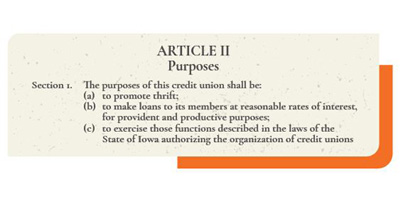
Credit unions offer a community-focused, member-owned alternative to traditional banking services. Unlike for-profit banks, which prioritize shareholder profits, credit unions serve the needs of their members. This fundamental difference influences all aspects of credit union operations, including the products they provide and the values they promote.

Additionally, credit unions are closely connected to local communities. This enables them to deliver personalized service and a strong commitment to financial education that goes beyond simple transactions. Many credit unions enhance financial wellness by providing free workshops, counseling, and youth savings programs.

Discover why credit unions are not only different but also make a positive impact by exploring the following resources.


The Difference Between Credit Unions and Banks


Credit Unions

  • Ownership: Member-owned; each member is a part-owner.
  • Income Model: Not-for-profit; earnings returned to members via better rates and lower fees.
  • Governance: Democratically controlled; one member, one vote.
  • Focus: Focused on members' needs, not shareholders.
  • Rates & Fees: Offer higher savings rates, lower loan rates and fewer/lower fees.
  • Community Involvement: Often community-based and mission-driven.
  • Service Approach: Personalized, relationship-based service.
  • Eligibility: Must meet membership requirements (location).

Traditional Banks

  • Ownership: Shareholder-owned; focused on maximizing investor returns.
  • Income Model: For-profit; profits go to shareholders.
  • Governance: Controlled by a board elected by shareholders.
  • Focus: Prioritizes profit over customer needs.
  • Rates & Fees: Often lower savings rates, higher loan rates and more fees.
  • Community Involvement: Less locally focused; community involvement varies.
  • Service Approach: Standardized service; may be less personal.
  • Eligibility: Open to the general public with no membership restrictions.


The Ascentra Difference


What Sets Ascentra Apart?

Unlike banks, we don’t answer to stockholders or investors, we answer to YOU. As a local, democratically controlled not-for-profit, each member of Ascentra Credit Union owns a share in the credit union. When you join Ascentra, you are not a customer you're a member-owner and are treated as such. 

We put people before profits. Those profits then go back to you, in the form of lower interest rates on loans, higher returns on your deposits, and lower fees.

For our 40,000 members who directly benefit from our cooperative model, it's more than just about financial services, it’s about being part of an organization made up of people who genuinely care about your financial well-being and the communities we serve.  An organization that is always listening, caring, and doing what’s right. 

Ascentra Scholarship Program

Each year, Ascentra offers up to $15,000 in scholarships to assist student members planning to further their education through undergrad programs, continuing education (post graduate) or through trades/vocational programs.

 Applications open in October and close in March of each year. 

LEARN MORE

Ascentra Foundation

The mission of the Ascentra Credit Union Foundation is to improve the quality of life for the membership of Ascentra Credit Union and further the philanthropic outreach in the communities we serve.

$1,035,092

in local charitable
contributions since 2015

LEARN MORE


Related Articles

See All Articles

Buying a Home: Tips to Know Before You Get the Keys

  • Jul 13, 2026

Mortgage grantsBuying a home comes with a lot of questions, but understanding the mortgage process can make each step feel more manageable. These quick tips will help explain key terms and valuable information all home buyers need to know.

Mortgage Experts: A mortgage makes homeownership possible for many buyers, and your Ascentra Mortgage Expert is there to guide you every step of the way. They can help you understand what you can realistically afford, compare loan options, and navigate the process from pre-approval to closing.

Pre-qualification vs. Pre-approval: Prequalification is a rough estimate based on basic information, while pre-approval is a more detailed review of your income and finances using official documents. Realtors often require pre-approval and Ascentra only offers pre-approvals.

Mortgage Options: Choosing the right mortgage plays a key role in long-term affordability. Fixed-Rate Mortgages remain the most common option, offering stable payments over 10, 15, or 30 years. Adjustable-Rate Mortgages (ARM) may offer lower initial rates for a set period, though payments can change later based on the economy.

Credit Score: While a score of 620 is preferred, approval is based on multiple factors, including stable, consistent income with no unexplained gaps or reductions. At Ascentra, qualified borrowers receive the best available rate on traditional fixed-rate mortgages, without rate increases tied solely to credit score.

Private Mortgage Insurance (PMI): If your down payment is less than 20% of the total home value, you’ll be required to pay for PMI. PMI protects the lender if the loan goes into foreclosure, not the borrower. In many cases, PMI can be removed once the borrower has built 20% equity in the home.

Down Payment Assistance & Grants: To help make homeownership more attainable, Ascentra offers a $15,000 First‑Time Home Buyers Grant for income‑qualified buyers through the Federal Home Loan Bank of Des Moines (while funds last). These grants can be used toward both down payment and closing costs, helping to reduce the upfront financial burden.

No matter where you are in the homebuying journey, having the right support can make all the difference. Learn more by contacting an Ascentra Mortgage Expert.




Ascentra Great Rates

View All Rates


What's New at Ascentra

See All Articles